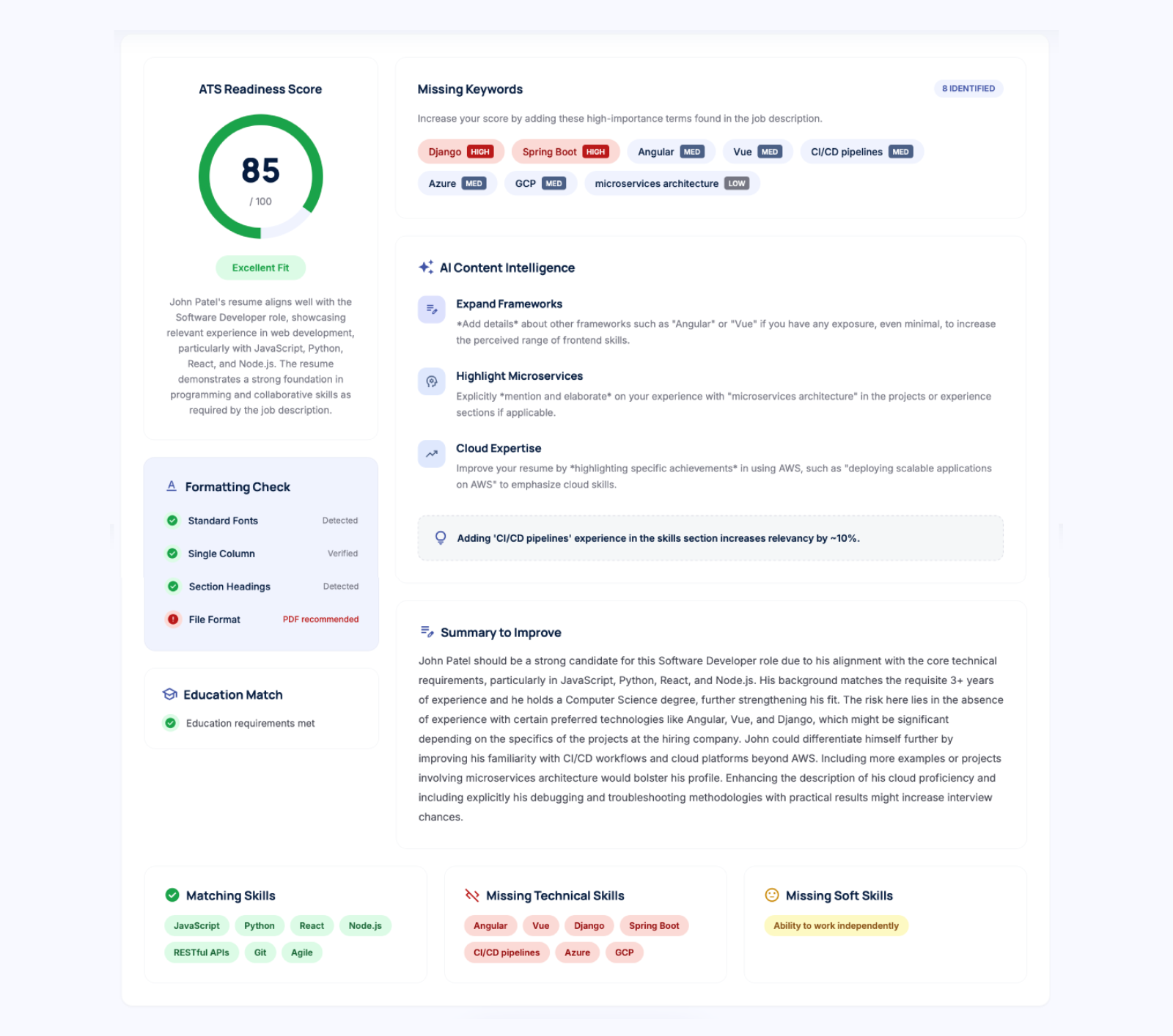
How They Screen Resumes and Why Your Resume Might Be Getting Rejected

Description of the image

Introduction

In today's competitive job market, submitting a resume is no longer just about impressing a hiring manager—it's about getting past an automated system first. These systems, known as Applicant Tracking Systems (ATS), are widely used by companies to streamline the hiring process. However, many qualified candidates find their resumes rejected before they ever reach a human recruiter.

If you've been applying to jobs and not hearing back, the problem may not be your qualifications—it could be your resume's compatibility with ATS. In this guide, we'll explain how ATS works, why resumes get rejected, and how you can optimize your resume to improve your chances of landing an interview.

What is an Applicant Tracking System (ATS)?

An Applicant Tracking System (ATS) is software used by employers to manage job applications. It automates the hiring process by:

Companies of all sizes use ATS to handle high volumes of applications efficiently. Popular ATS platforms include Workday, Greenhouse, Lever, Taleo, and iCIMS.

How Does an ATS Screen Resumes?

Understanding how an ATS works is crucial for optimizing your resume. Here's a breakdown of the process:

1. Resume Parsing


When you submit a resume, the ATS parses (reads and extracts) information such as:

The system converts your resume into a structured format that it can analyze. However, complex formatting can confuse the ATS, leading to misinterpretation or rejection.

2. Keyword Matching


ATS software scans resumes for keywords related to the job description. These keywords may include:

If your resume lacks the right keywords, the ATS may rank it lower, reducing your chances of being shortlisted.

3. Scoring and Ranking


After parsing and keyword matching, the ATS assigns a score to your resume based on how well it aligns with the job description. Recruiters typically review only the top-ranked candidates, so a low score means your resume might never be seen.

Why Do Resumes Get Rejected by ATS?

Many resumes are rejected by ATS for reasons that have nothing to do with qualifications. Here are the most common causes:

1. Poor Formatting


ATS struggles to read resumes with:

Solution: Use a simple, clean format with standard fonts like Arial, Calibri, or Times New Roman.

2. Missing Keywords


If your resume doesn't include the specific terms from the job posting, the ATS may not recognize your qualifications.

Solution: Tailor your resume for each job by incorporating relevant keywords naturally into your experience and skills sections.

3. Unconventional Section Headings


ATS looks for standard headings like "Work Experience," "Education," and "Skills." Creative titles like "My Journey" or "What I've Done" can confuse the system.

Solution: Stick to traditional section names.

4. Using PDFs (in Some Cases)


While many modern ATS can read PDFs, some older systems struggle with them and may reject your resume.

Solution: Unless the job posting specifies a format, submit your resume as a .docx file for better compatibility.

5. Overuse of Abbreviations


ATS may not recognize uncommon abbreviations or acronyms.

Solution: Spell out terms the first time and include the abbreviation in parentheses (e.g., "Search Engine Optimization (SEO)").

6. Lack of Relevant Experience


If your resume doesn't clearly demonstrate how your skills and experience match the job requirements, the ATS will rank it lower.

Solution: Highlight achievements and responsibilities that align with the job description.


How to Optimize Your Resume for ATS

Now that you understand why resumes get rejected, here's how to optimize yours for ATS success:

1. Use Keywords from the Job Description


Match your resume to the job posting by incorporating relevant keywords naturally. Don't stuff keywords—use them in context within your experience and skills sections.

2. Choose the Right File Format


Unless specified otherwise, submit your resume as a .docx file to ensure maximum ATS compatibility.

3. Keep Formatting Simple


Avoid complex layouts, graphics, and tables. Stick to a clean, linear format with clearly defined sections.

4. Use Standard Section Headings


Label your sections with traditional headings like "Work Experience," "Education," and "Skills" so the ATS can easily categorize your information.

5. Spell Out Acronyms


Write out full terms first, then include abbreviations in parentheses (e.g., "Certified Public Accountant (CPA)").

6. Tailor Your Resume for Each Job


Customize your resume for every application to highlight the most relevant experience and skills for the role.

7. Test Your Resume


Use online ATS checkers or resume scanners to see how well your resume performs before submitting it.


What is a Good ATS Match Score?

Many ATS platforms assign a match score to resumes based on their alignment with the job description. Here's what different score ranges typically mean:

Aim for a score of at least 70-80% to maximize your chances of getting an interview.

ATS Resume Optimization Tips

Common Myths About ATS

There are several misconceptions about ATS that can lead job seekers astray. Let's debunk a few:

Myth 1: "ATS Automatically Rejects Most Resumes"


Reality: ATS doesn't reject resumes—it ranks them. Recruiters decide which candidates to contact based on ATS rankings and their own judgment.

Myth 2: "You Must Use Exact Keywords to Pass ATS"


Reality: While keywords are important, modern ATS can recognize synonyms and related terms. Focus on demonstrating your qualifications naturally rather than keyword stuffing.

Myth 3: "Creative Resumes Never Work with ATS"


Reality: While overly complex designs can cause issues, you can still have a visually appealing resume that's ATS-friendly by using simple formatting and standard fonts.


Final Thoughts: Beating the ATS

Applicant Tracking Systems are a reality of modern job searching, but they don't have to be a barrier to your success. By understanding how ATS works and optimizing your resume accordingly, you can significantly improve your chances of getting past the initial screening and landing an interview.

Remember these key takeaways:

With the right approach, you can create an ATS-friendly resume that showcases your qualifications and gets you noticed by recruiters. Good luck with your job search!